Title from The Homebound Symphony’s sprawling along the way: a polemic and an exhortation
What characterizes the hopeful Christian, Thomas says, is the status viator – the state of being a wayfarer. Thus Josef Pieper refers to “the wayfaring character of hope.” Wayfarers know their destination but aren’t sure how to get there; all along the way they look for signs indicating the best path, and seek help both from their companions and from those they encounter on the road. They know that they have to be flexible and agile; they know that their enemies are Aimlessness and Fixity. They trust in a Guide they cannot see; they listen for His still small voice. Maybe things will be better than they expect; maybe worse; unquestionably different. But they make their way along the pilgrim road…
Leading with the conclusion there. When I started this site in 2001 I wrote the tagline “seeking stories beauty meaning” and as I read the above portion of a post that had me nodding all the way through, I thought about how well that tagline served me in my wayfaring. I was in the midst of an escape from a season in evangelicalism that began with four years in a charismatic cult during college, about another four years in more mainstream evangelical institutions culminating in disillusionment (what is now called “deconstruction” by the current generation of evangelical expatriates discovering faith does, in fact, live outside those walls), followed by a permanent state of in via, I suppose. And now, at least in terms of strictly religious practice, a casual return to the Anglicanism of my childhood. In terms of real praxis…it is, as they say, complicated.
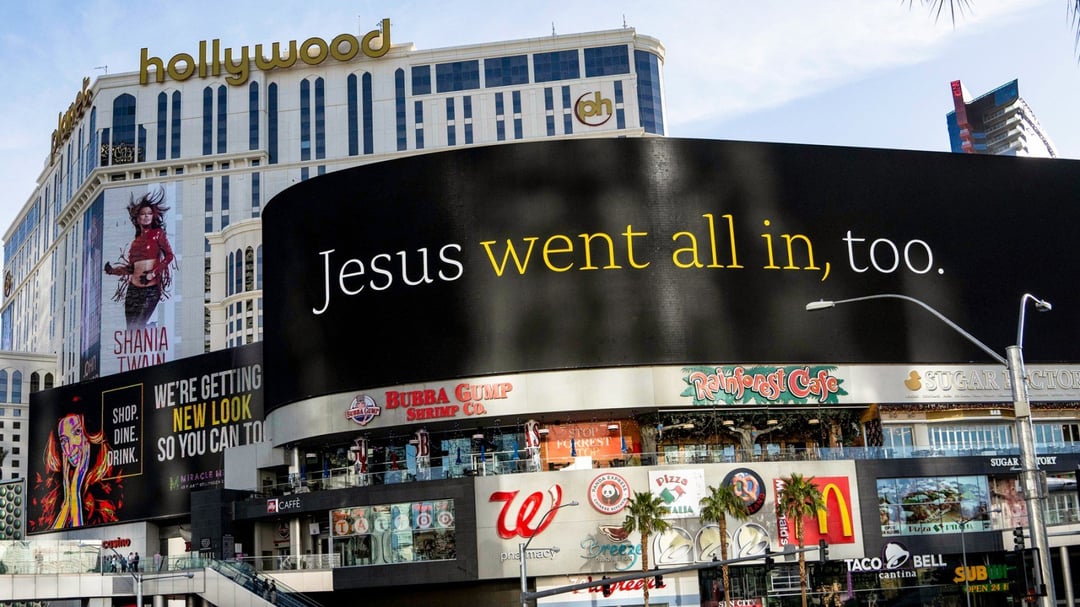
Where would Jesus eat? 🤔
Living in a place where evangelicalism is dominant is an odd experience for someone like me. Trying to understand the visceral tailings of the cognitive dissonance engendered by its practice still discomforts me.
I have a page in my notes app titled “The Hypothesis” with various versions of this idea, which I haven’t, and still will not, share here, but then Alan already wrote in 2022:
Whenever Christians decide that they need a strategy, they’re writing a recipe for disobedience to the Lord Jesus.
One of those notes is just a link to Luke 12:13-33, where Jesus himself says something simple and obvious:
…not even when one is affluent does his life consist of his possessions…
…then tells a story about a rich person who goes to a lot of trouble to prepare his wealth for its future protection and expansion, only to die the next day. Not the most creative storytelling, but it gets the point across. He then continues on to one of the more quoted of his quips, my favorite version coming from the Coen brothers:
…consider the lilies of the goddamn field.
The curse inverts the comparison. The lilies’ field is devoid of the alienation of capital, of course they grow without labor, damn it.
A Christian deciding they need a strategy isn’t a recipe for disobedience only because it might prevent them from obedience by prioritizing their own plans. It is a violation of the very thing evangelicals are so on about: being in the world not of it. To western Christians, the world is immorality as determined by their cultural mores, justified by specific readings of their core text. (Large, disconnected collections of ancient texts are very useful for justifying any given moralistic position.) But there’s a different reading of those same texts, one that is more akin to a physics curriculum than an economic one, one that is less math and more a window into a different dimension where the math is totally different.
In that dimension, that we now see in a riddle, many who are first will be last, and the last first, and the Godhead itself is literally embodied in the poor, immigrants, and prisoners. Even if still a riddle, the themes seem to indicate some actions relatively more involved than holding a poster board with “John 3:16” written on it.
The great commission isn’t winning a debate or buying a Super Bowl commercial. It is something far more radical.
“Seeking” served me well. But now, in the back half of my brief moment in time, perhaps I get a glimpse of something beyond the hazy horizon, something weird, liminal, numinous. Something radical. Something like grace.
-
Most of my writings about the state of modern Christianity happened before ~2005. But this post from 2008, in which I critique modern art scenes, where I had exiled to in my search for meaning, has a concise aside encapsulating all my previous thinking: Just as many Christians have come to worship the text instead of the God who presumably authored it, we will continue to make attempts at words that will give authority to what essentially amounts to some vaguely aesthetic abstraction of our desires. ↩