Social media is weird. It’s like, “I don’t want to sit here and think my own random thoughts. I’d much rather read the random thoughts of hundreds of other people instead.”
There is a trend on the fediverse tagged #silentsunday, in which people post serene images. It feels like the secular, social media version of a sabbath. I have a bad habit of pulling up Mastodon first thing in the morning, and even with my extensive filters removing political content, there is just a lot of bad news these days. But typically much less on Sundays.
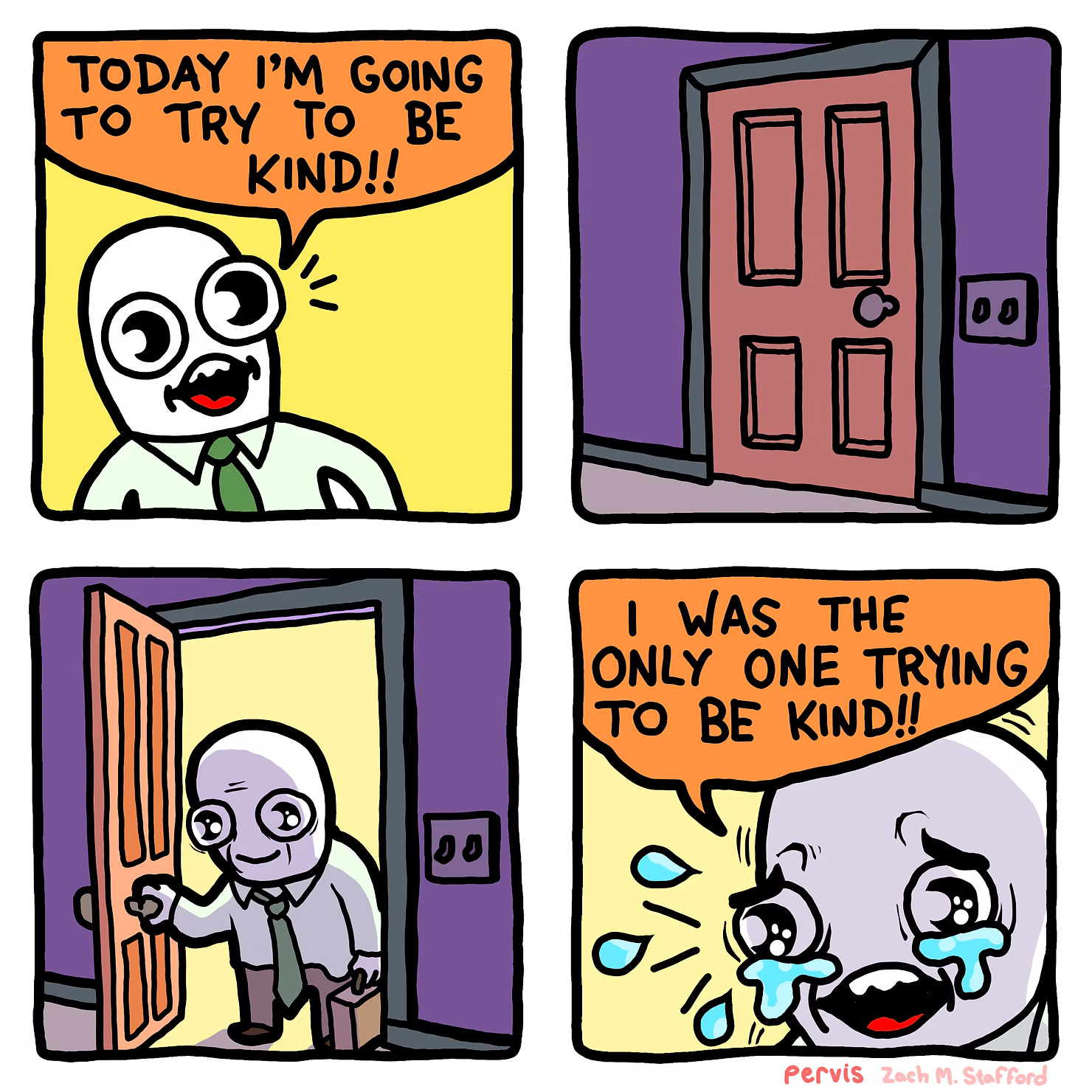
It feels like this most days. This is why I try to get myself into communities and situations that embody grace.1 Primary of those are my sober groups2, but also my church3, and occasionally friends or groups of friends.4 They remind me and encourage me to restart each day like the first panel, to not get into a cycle where the last panel changes me. They also remind me that, despite my best efforts and my own opinion of myself, I am also frequently unkind. And that’s ok, and they still accept me into their communities. That is grace.5
Grace in Regret, Resentment, and Nostalgia
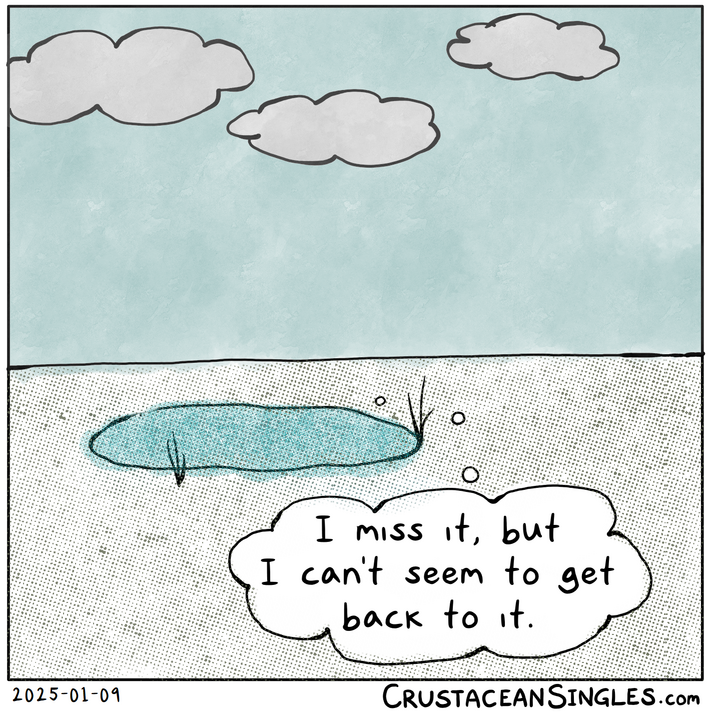
Crustacean Singles: Bottom of the cycle
Unexpected outcomes
I went to Germany for a month in the summer between high school and college. I was on a bike racing team and one of my teammates discovered a Sport for Understanding bike racing trip and convinced me to go. There are a lot of stories from that trip that live only in my memory and a faded journal in a box in the closet, but the main result was an abiding love for European…everything. It fundamentally changed who I was. I spent the better part of the next decade trying to get back there permanently. I married an ex-pat European (in Florida, of all places) and we made many trips to her home country, and to Germany where her uncle lived. Then we finally had the opportunity to move there for her work. Then our marriage quickly fell apart and I ended up back in the United States. In the end, I lived in Europe for under six months, and in a deliciously ironic twist I ended up moving to Texas, where I have lived for over two decades.
But Texas is also where I met my wife-wife6, was able to have children, etc. I nudged–one could say shoved–my stepson to go to Europe between high school and college; and now he is in Italy for a semester abroad; and over spring break the rest of my family went there to visit him and for my two youngest children’s first trip to Europe; a trip I could not join because my broken hip has left me mostly immobile even after three months. That was supposed to be my first trip back to the living waters of environmental beauty in two decades, thirsty as I am living in the grim surroundings of Quintessential American Aesthetics.
The same knife just keeps twisting.
Bicycling was a central aspect of my life from early high school through college. There was a long period where it took a significant back seat, but I returned to it over a decade ago. It provided exercise, time outside, a kind of built-in meditation, and a way to appreciate my surroundings in a way that most of means of travel cannot. Then I crashed for the first time in many decades, and am unsure if I will ever get to ride in remotely the same way again.
I don’t get out much these days, but when I do it is in a car, a mode of transport that most embodies both self-loathing and real hate for the other. Other drivers are in your way from driving where you need to go. Infrastructure, starved of resources from a population convinced taxes are unfair, is crumbling; but potholes aren’t a failure of collective will, they are a personal affront to your property. The cost of your always-depreciating vehicle is compounded by the costs of continued maintenance, yearly inspections and registrations (a bureaucratic oppression oddly ignored by the libertarian-leaning right), gas, insurance, and of course the constant threat of physical harm (and resultant medical cost burdens) and property loss when you inevitably experience a crash (which is always an “accident”). Travel along car infrastructure is a tour of the most ugly surrounds available in this world. And primarily, your personal vehicle, that beacon of freedom, keeps you separate from everyone else. It’s the one thing you must have that also best creates the conditions of your own spiritual death.
I had an old note in my blog post backlog, something like “cars/bikes”. Maybe it had more nuance. I must have decided to delete it; there is plenty out there on this subject. But I guess I just wrote the short version of my take.
Escaping the car reality in a city like this one requires primarily time, but also something like riding a bicycle and/or more walking.
Is that God holding the knife?
I’m going to leave out all the other lamentations–those we share “in 2026”, the relentless purging of art and beauty, the other numerous ailments–and make my point.
This is a story as old as time.
You don’t have to even search for them. I’m currently watching my church’s service via their livestream. A part of the liturgy always includes a reading from the Psalms. Almost every one tells this story. Todays was the one later numbered 31.
Be gracious to me, O Lord, for I am in distress; my eye wastes away from grief, my soul and body also.
For my life is spent with sorrow and my years with sighing; my strength fails because of my misery…
The author goes on and on! I’ll spare you some of his bitching, given how much of my own you’ve endured already. But the drama! If this was an emo song even the most faithful goths would reject it in disbelief.
I have passed out of mind like one who is dead; I have become like a broken vessel…
And the paranoia! If you believe the author was a Jewish king best known for ensuring the death of one of his military leaders so he could have sex with his wife, the paranoia makes more sense…but also easier to personally dismiss.
I hear the whispering of many–terror all around!–as they scheme together against me, as they plot to take my life…
But they all end in a similar way:
But I trust in you, O Lord; I say, “You are my God.” My times are in your hand…
One of the first songs I wrote after learning guitar was this psalm.7 I recorded it for my first record, the one I don’t include on my music page. The chords and lyrics (which are just a few of the above lines from a different translation) might exist in an ancient word doc on a backup hard drive around here somewhere.8 But I remember that it was an oddly upbeat song even over the lamenting portion of the lyrics. The first of many Happy Sounding Sad Songs, I suppose.
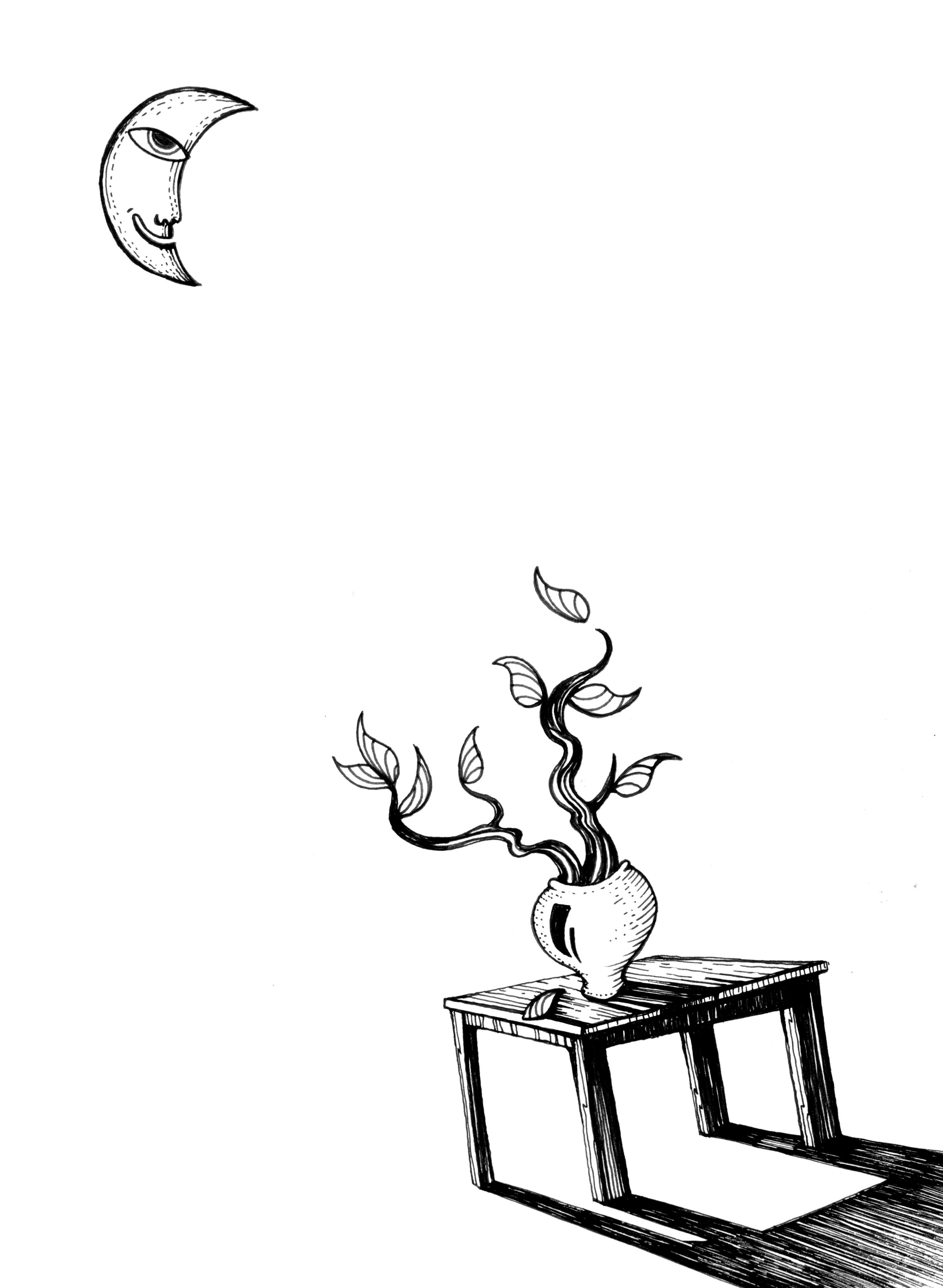
For some reason I went looking on said hard drive and found these original illustration by Vladimir Zimakov, who I was lucky enough to know through my art gallery days. I want them to exist online but not sure where to put them (they might be in the Bandcamp download) so I’m just putting them here because they evoke all of…this.
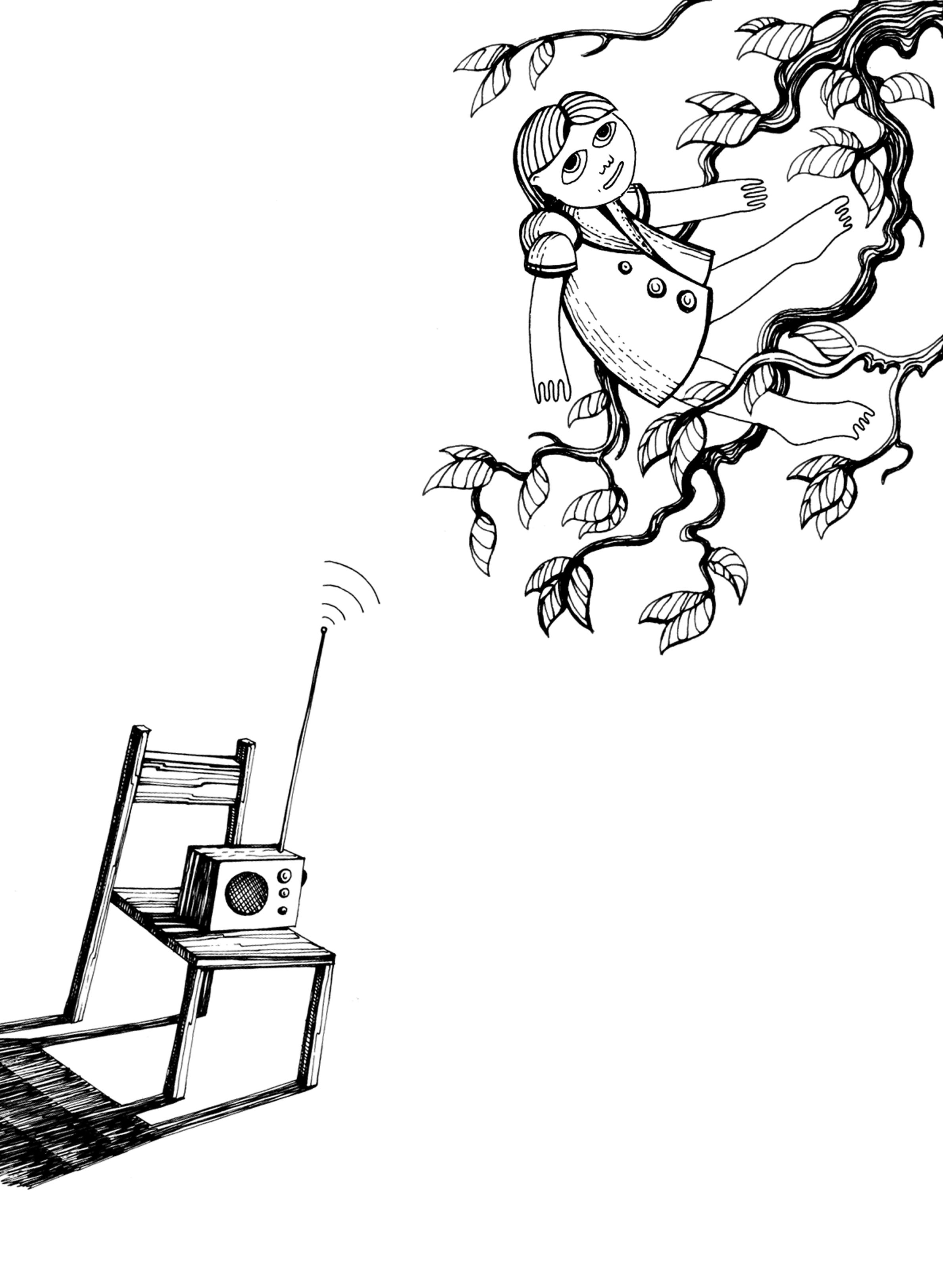
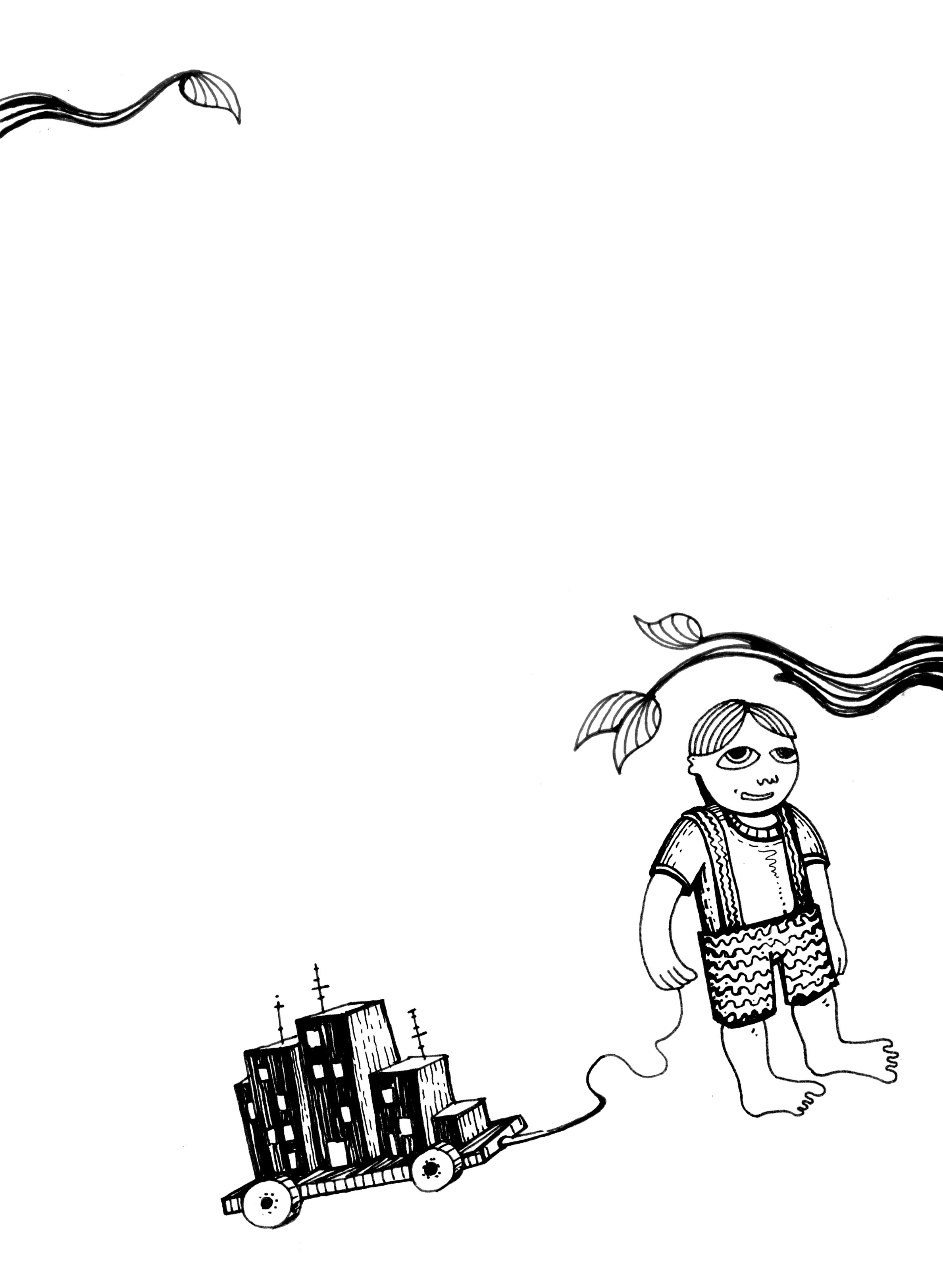

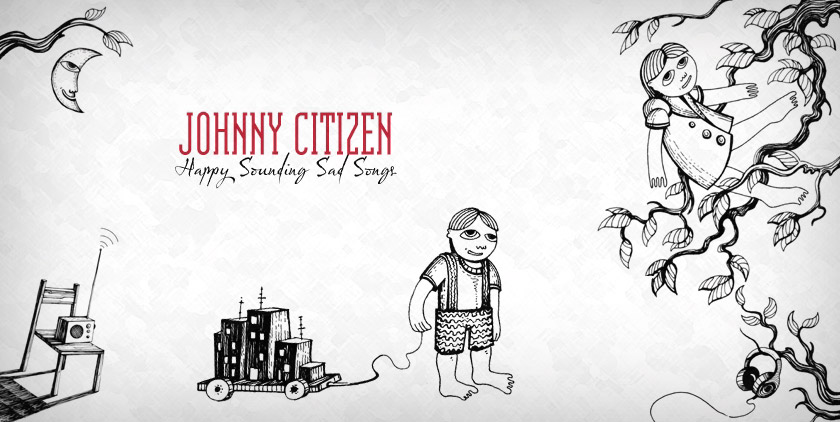
This was the only decent rendition of the album cover art I found, but was actually the header image for the album’s website.
So…
One is left with many ways-of-seeing.
Nihilism. Nothing matters. Pretty obvious.
Hedonistic nihilism. Nothing matters, so I should get mine, pursue and indulge my desires.
Optimistic nihilism. Nothing matters, but we’re all in this together, so let’s make it as good as we can while we’re here.
Predestination. This one is interesting as it is shared by the most religious and the most atheistic. Either God, or the conditions we were born into, determine all outcomes. No point in pretending in agency. I note this one as distinct from the nihilistic options but now I struggle to think of how it differs in practice.
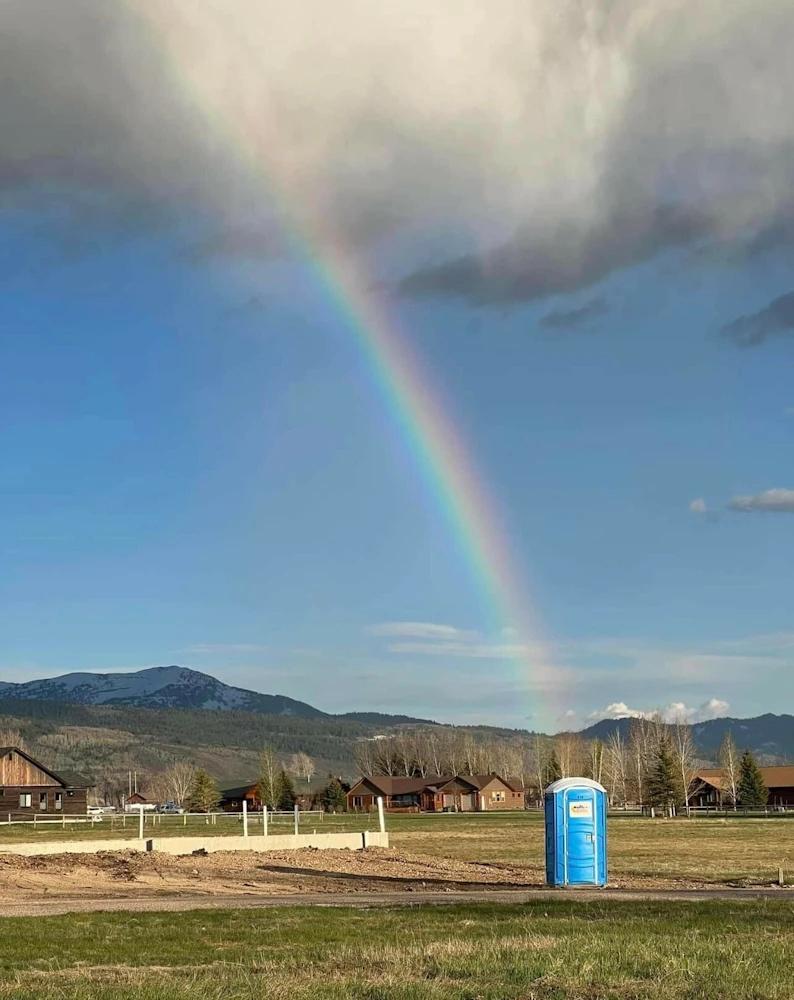
An interventionist God. Anecdotally this is the most common amongst people of faith. Hence prayer as intercession. We have some agency, even if we never really know if it worked or not. There is a saying that God answers prayers in three ways: “Yes, no, or not right now.” They’re all equally horrible. How many fables and parables are there about someone getting what they wanted only to have it ruin them in the end? What does a flat “no” mean when the prayer is to save a child? What does “not right now” mean when the ask is to relieve suffering? You’re left to express your most banal mental gymnastics. “Everything happens for a reason.” Yeah, the reason is you’re an idiot and God is an asshole.
A non-interventionist God. When I first heard Nick Cave sing “I don’t believe in an interventionist God” as he looked into the camera in one of the most heartbreaking and moving music videos of all time, I felt seen for the first time in a long time. (He wrote that song 30 years ago, when I was writing my cringeworthy version of psalm 31.)
Because what he’s really describing in that song is grace.
I believe in some kind of path
That we can walk down, me and you
So keep your candles burning
And make her journey bright and pure
That she will keep returning
Always and evermore
There is the answer to loss and pain. It is embodied grace. There is much more to it, but art like that shows us the way. 12 Step programs’ “suggestions” almost all point to this kind of way-of-being. The story of the Chinese farmer is in there. Divine nonchalance is hanging around the edges.
Graceful is a term most often used to describe physical movement but can also describe ease, fluidity, and elegance in form or behavior. A human embodying grace moves gracefully through life. The symptoms are hope, love for the other, endurance through pain, humility and quiet confidence, honesty, acceptance.
There isn’t a good word for the opposite, more pervasive way, but the symptoms are clear: fear, hate, despair, pride, lying, resentment, simple-mindedness. We all experience these. A graceful person simply attempts to be curious about them and about the ways they might become more graceful in the face of what caused them.
-
Grace is a frequently tagged thing on this blog, because I believe it to be a central concept of being a good human, and a strongly prompted way of being if one is into trying to listen for numinous prompts; but it is also potentially the concept most twisted by the very institutions originally created to promote it. (See #5 below.) [Note: I wrote this footnote before the entire post veered into this topic.] ↩
-
Thankfully, these truly anarchist, anonymous collectives meet multiple times per week all over my fair city. ↩
-
This one is tricky (see footnote #1), and while I have found a church that actually embodies true Christian grace (an almost impossible endeavour, especially in the United States, and especially in this area of the United States [aka the Bible Belt]), I have found it difficult to engage with it/them. This is probably due to a confluence of factors: Resistance (in the Steven Pressfield sense), the fact that it is a 20-minute drive, it is mostly comprised of people significantly older than myself (although this is also a good thing), I don’t like any church music (my church sings hymns, which is at least better than “praise and worship” music, or as I say, “Jesus is my boyfriend” music), it is pretty milquetoast when it comes to radical social action (but at least it is on the correct “side”, from an ethical standpoint), and most recently the fact I cannot drive myself there. ↩
-
Speaking of tricky! The demands of late-late capitalism has eroded our ability to find time to gather as just people. Friendship is some kind elusive idea now, especially as one ages and takes on responsibilities. We don’t have friends anymore, we have acquaintances on our kids’ sports teams, at work, at the HOA. “Friends” are people we text twice a year in a futile attempt to arrange a lunch together. ↩
-
As opposed to the mainstream Christian idea of grace as adherence to a particular eschatology. ↩
-
I considered “second” or “current” here, but both sound icky, and I am also superstitious enough to think using those words could lead to other icky words. Marriage is always a difficult endeavour and I’m fairly convinced most lasting ones are simply agreements to embody enough grace to persist through the difficulties. ↩
-
Oddly, I recently wrote some about that era in my personal notes: I’ve been a Christian all my life. Around the turn of the century, that faith transformed, after a childhood in the American Anglican tradition and a stint in a charismatic cult and a more brief stint in mainstream evangelicalism. I’d found all of those traditions–cultures, really–wanting, and I’d become a musician. Well, I’d been a drummer my entire life but during the charismatic era, my church had an admittedly killer band, and I’d learned guitar and started writing songs. Sitting on my own in my room and creating a new chord progression and then singing whatever came to my mind over those chords was transformative. Even as I was excommunicated (non-Catholics call it “disfellowshipped”) (I just learned that term originates with the Jehovah’s Witnesses…appropriate for the church I was in as even though they were not JW, there were a lot of similarities) the connection I felt to something numinous when I made music didn’t break. ↩
-
Ok, I ended up finding the original recording, which is bad and cringe in a way I can only call “delightful” with three full decades of hindsight, but I did not find the chords/lyrics sheet. Some of the songs, poorly recorded as they were, were solid starts. Remembering them makes me want to revisit some of those ideas. There were certainly some of persistent aspects of my songwriting in there, like instrumentals and odd time signatures. ↩